How to Improve Rainwater Tank Quality at Home
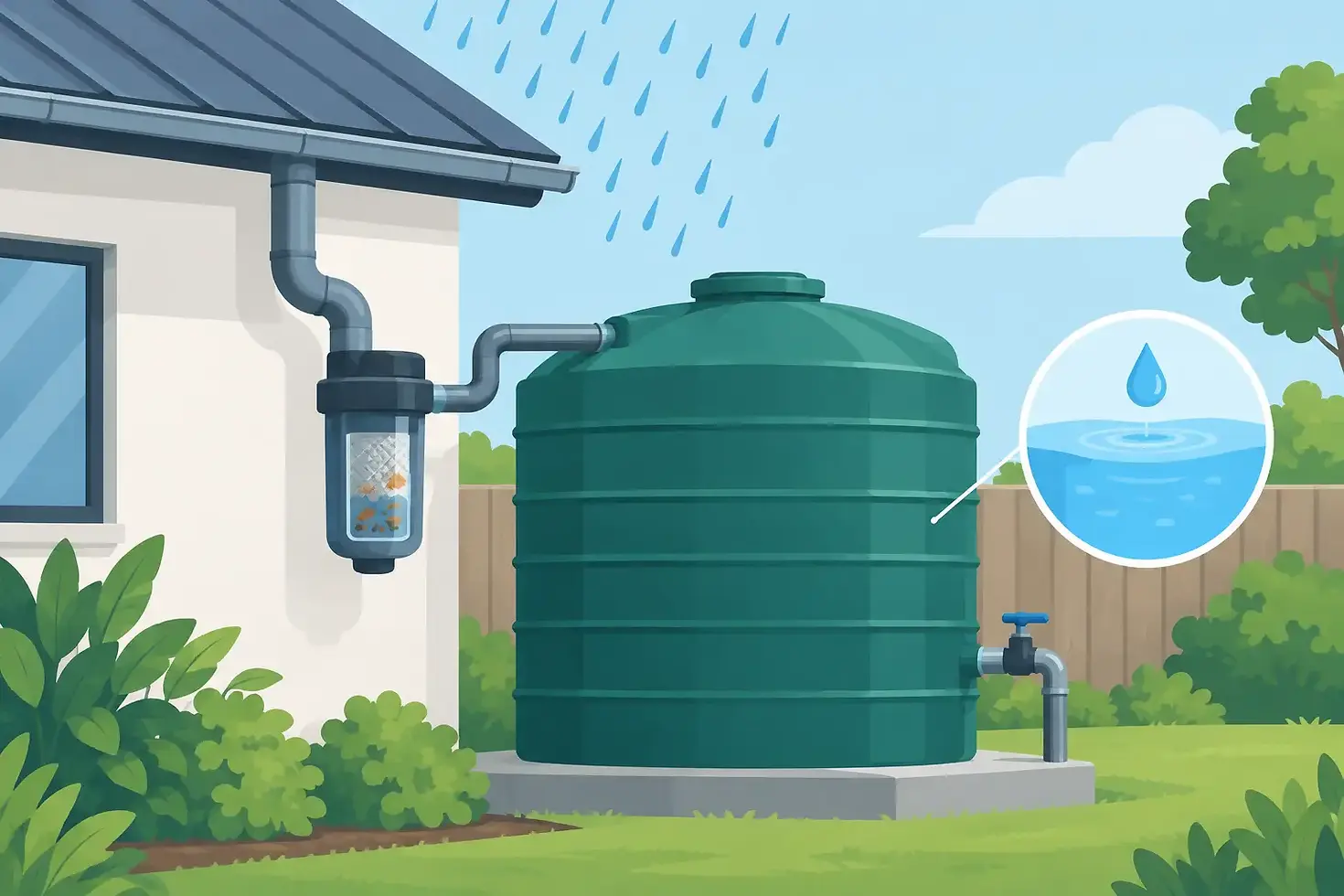
A rainwater tank can be one of the most valuable assets on an Australian property, particularly when it supplies drinking water, showers, cooking and laundry. But collecting rain is only the first step. To improve rainwater tank quality, the water needs protection at every stage - from the roof and gutters to the tank, pump and taps inside your home.
Clear-looking water is not always clean water. Fine sediment, bird droppings, leaf litter, airborne dust and microscopic organisms can enter a rainwater supply long before it reaches your glass. A well-designed treatment approach gives your household greater confidence in every drop, while helping protect plumbing fixtures and appliances from sediment build-up.
Start with the water catchment
Your roof is the first surface rainwater touches, so its condition directly affects tank water quality. Leaves, pollen, dust, ash, bird and possum droppings can wash into gutters during a downpour. After a dry spell, the first rainfall often carries the highest concentration of debris.
Keep gutters and valleys clear, particularly before periods of heavy rain. Trim branches that overhang the roof where practical, as they add organic matter and create easy access for animals. If your property is surrounded by trees, gutter guards can reduce the volume of leaves entering the system, though they still need occasional cleaning themselves.
Roof material also matters. Painted metal roofs are common and generally suitable for rainwater collection when well maintained. Older roof coatings, deteriorating paint, exposed lead flashing or poorly maintained asbestos cement sheeting deserve professional advice before the water is relied on for drinking. A tank cannot filter its way out of every catchment issue.
Fit screens and a first-flush diverter
A fine mesh leaf screen at the gutter outlet helps stop larger debris from reaching the tank. Tank inlet screens provide another barrier and should be intact, securely fitted and fine enough to keep out mosquitoes and insects.
A first-flush diverter is especially worthwhile for drinking-water tanks. It diverts the initial roof runoff away from the tank, carrying with it much of the dust and contamination that has settled between rains. The ideal diversion volume depends on roof size, local conditions, nearby vegetation and how the tank is used. It needs periodic cleaning to work as intended, so it should be accessible rather than hidden away and forgotten.
Protect the water once it is in the tank
The tank itself should be a closed, dark and well-maintained environment. Sunlight encourages algae growth, while gaps in lids, screens or overflow protection invite insects, frogs, rodents and debris. Check that the access cover closes properly and that the overflow outlet is screened.
Sediment naturally settles at the base of a tank. Over time, this layer can harbour organic material and reduce available storage. A calm inlet or tank diffuser helps prevent incoming water from stirring up settled sediment. The pump draw-off point should also sit above the bottom of the tank rather than pulling water from the dirtiest zone.
Tank cleaning is not needed on a fixed calendar alone. It depends on the catchment, tank design, local environment and the condition of the water. If there is visible sludge, a persistent smell, poor water clarity or an unexplained change in taste, arrange an inspection. Cleaning is best done by a qualified professional, particularly where the tank is your home’s primary water supply.
Improve rainwater tank quality with filtration
Good tank management reduces the treatment burden, but filtration is what provides a more dependable final line of defence. The right system depends on whether rainwater is only used for gardens and toilets or supplies the entire household.
For a home using tank water at every tap, point-of-entry filtration is the strongest approach. It treats water as it enters the property, rather than relying on a single kitchen filter while unfiltered water continues to feed showers, basins, washing machines and appliances. This is particularly valuable for families who want cleaner water for drinking, bathing and everyday use.
A multi-stage system commonly begins with sediment filtration. This captures fine particles that can make water appear cloudy, affect taste and wear down pumps, hot-water systems and taps. The filter rating should suit the water source and household flow requirements. Filtering too finely too early can restrict pressure and cause cartridges to block prematurely, especially after heavy rain or tank disturbance.
Carbon filtration may also be beneficial where rainwater has earthy tastes or odours, depending on the water chemistry and system design. However, filtration alone is not the same as disinfection. Standard sediment and carbon filters are not a substitute for a properly specified barrier against microbiological risks.
Why UV sterilisation matters
Ultraviolet, or UV, sterilisation is a highly effective option for rainwater used as drinking water. A UV system exposes flowing water to ultraviolet light, inactivating many microorganisms without adding chemicals or changing the taste of the water.
For UV treatment to perform properly, the water must be clear enough for the light to penetrate. That is why pre-filtration is essential. Sediment can shield microorganisms from UV light, while dirty filters reduce water flow and treatment effectiveness. The UV lamp, quartz sleeve and filters all require scheduled servicing. A system that has been installed but not maintained cannot offer the same level of assurance.
Rainwater treatment should be designed around actual demand. A small cottage, a busy family home and a large property with multiple bathrooms require different flow rates, filtration capacity and storage considerations. The premium solution is not automatically the largest system - it is the system correctly matched to the household and installed with care.
Know when water testing is worthwhile
Water testing is useful when a tank supplies drinking water, when there has been flooding or contamination, or when water quality changes unexpectedly. It can help identify bacterial contamination, pH issues, metals and other concerns that cannot be confirmed by sight or smell.
Testing is particularly sensible after bushfire smoke or ash exposure, major roof works, pest activity around the catchment, a dead animal in the tank, or an extended period with very low tank levels. During a drought, sediment can become more concentrated as water levels fall. When substantial rain arrives, the incoming flow may disturb sediment that has been sitting quietly at the bottom.
If results identify a concern, avoid guessing at a solution. The appropriate treatment depends on what is present, how much water the household uses and whether the issue originates on the roof, in the tank or in the pipework. In some cases, maintenance and a first-flush upgrade are enough. In others, staged filtration and UV treatment are the sensible long-term investment.
Maintenance protects water quality and system performance
Rainwater systems reward routine attention. Check inlet and outlet screens, clear gutters, inspect the tank lid and look for signs of insects or animal access. Monitor water pressure too. A noticeable pressure drop can indicate a blocked sediment filter, pump issue or restriction in the system.
Cartridge changes should follow the manufacturer's schedule, but real-world conditions matter. Homes in bushy areas, properties exposed to dust, or households with frequent rainwater use may need service sooner. Leaving a saturated filter in place for too long can compromise flow and reduce the effectiveness of the wider treatment system.
Professional maintenance removes the uncertainty. A properly serviced rainwater filtration system considers cartridge condition, UV performance, seals, pressure, bypass settings and the condition of the tank supply. For homeowners across the Illawarra, Southern Highlands and South Coast, this kind of support is especially valuable where changing weather and varied catchments place different demands on stored water.
The Water Alchemists can help homeowners assess rainwater quality and specify a whole-home filtration and UV solution suited to their property, water use and health priorities. Because every drop deserves to be pure, clean and healthy, the goal is not merely a fuller tank - it is water your family can feel confident using every day.
A clean roof, protected tank and professionally maintained treatment system work together. Give each part the attention it deserves, and rainwater can remain one of the most rewarding ways to care for your home and household.


Comments