Whole House Filter vs Undersink: Which Fits?
If your shower smells like chlorine and your drinking water tastes flat, the real question is not whether you need filtration. It is which type will actually improve daily life. When homeowners compare whole house filter vs undersink systems, they are usually weighing convenience, health priorities, budget and how much of the home they want protected.
That choice matters more than it first appears. One system treats water at a single point of use, usually the kitchen sink. The other treats water as it enters the home, which means every tap, shower and appliance benefits. Both can be excellent solutions, but they solve different problems.
Whole house filter vs undersink: the core difference
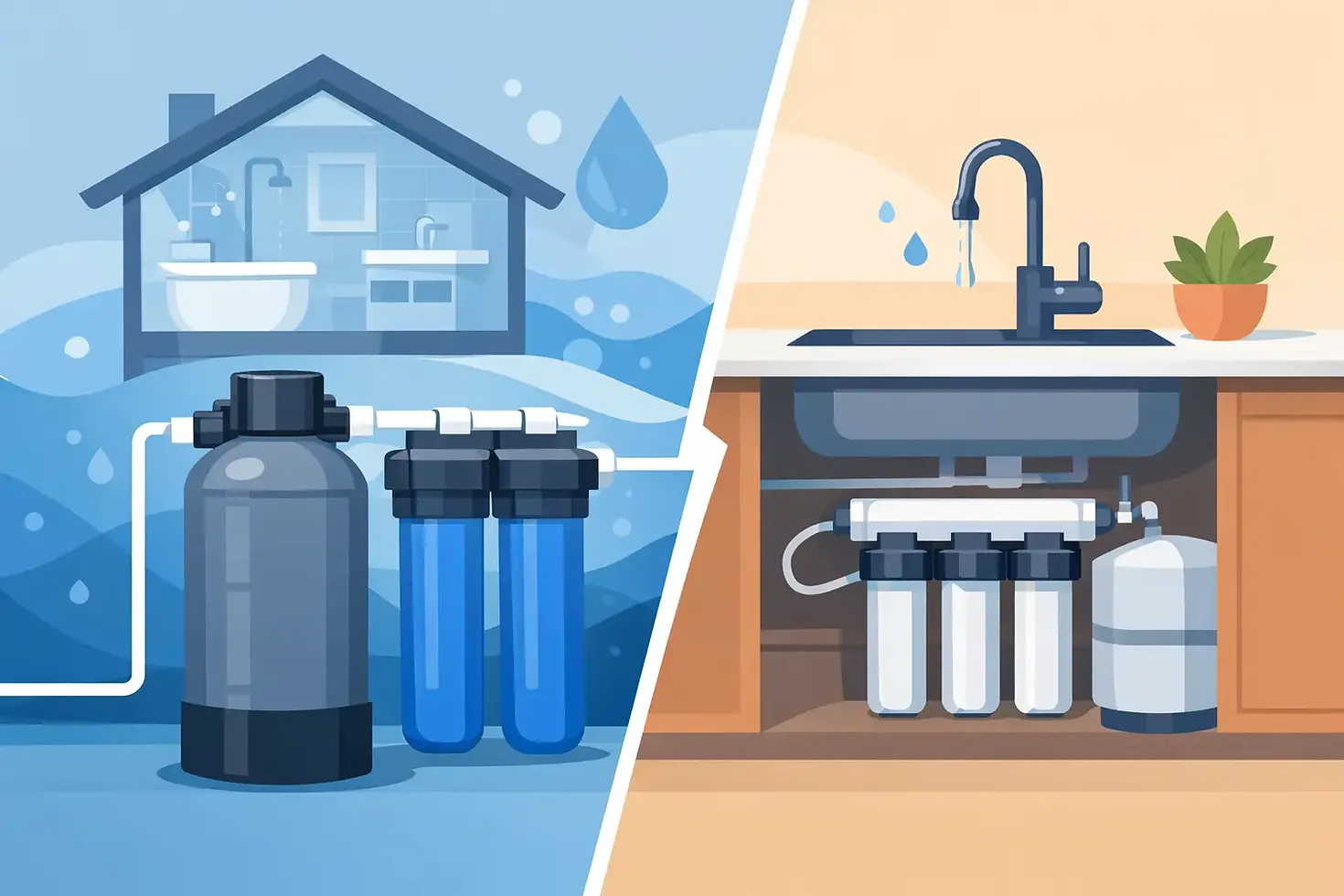
An undersink filter is designed to improve water at one outlet, most often for drinking and cooking. Depending on the setup, it may reduce chlorine, sediment, heavy metals and other selected contaminants. Reverse osmosis models can go further, which is why they appeal to households focused primarily on the water they consume.
A whole house filter, also called a point-of-entry system, is installed where water enters the property. It treats the supply before it reaches the rest of the home. That means filtered water for the kitchen, bathrooms, laundry, hot water system and often outdoor use if configured that way.
The practical difference is simple. If your concern is only the water you drink, an undersink system can make sense. If you want cleaner, healthier water throughout the home, a whole house system is the more complete answer.
What are you actually trying to fix?
This is where many people get stuck. They start shopping by product type instead of starting with the water issue itself.
If you are bothered by taste and odour at the kitchen tap, an undersink filter can be a smart, targeted upgrade. If your family is also exposed to chlorine in showers, washing, bathing and steam throughout the house, then filtering a single tap leaves most of the problem untouched.
For many Australian households on town water, chlorine is the first thing people notice. It affects taste, smell and the overall feel of water on skin and hair. Families also ask about PFAS, microplastics, herbicides, pesticides, heavy metals, bacteria and viruses. The right filtration approach depends on which contaminants are present, what level of reduction you want and whether your water source is mains or rainwater.
That is why a system should be matched to the home, not picked off a shelf based on a generic promise.
Where undersink systems work well
Undersink filters are popular because they are compact, relatively affordable and focused. If your priority is better tasting drinking water and cleaner water for tea, coffee, cooking and baby formula, they can deliver strong value.
They are also useful where space or budget makes a whole-home installation less realistic in the short term. Some homeowners begin with an undersink reverse osmosis system because they want very high purity water for consumption, while planning a broader filtration upgrade later.
There are trade-offs. An undersink unit does not help with chlorine exposure in the shower. It does not protect your washing machine, dishwasher, hot water service or bathroom fittings from sediment and other water quality issues. It also creates a split experience in the home - filtered water at one tap, untreated water everywhere else.
For some households that is perfectly acceptable. For others, it quickly feels like an incomplete fix.
Where whole house filtration stands out
A whole house system changes the water experience across the property. You notice it when you fill a glass in the kitchen, but also when you shower, wash your hands, run a bath or do the laundry.
For health-conscious families, that broader protection is often the deciding factor. Water is not only something you drink. It is something you bathe in, breathe in as steam and use on your skin every day. If reducing chlorine and a broader range of contaminants across the home matters to you, treating water at the entry point simply makes more sense.
There is also the lifestyle benefit. You do not need to think about which tap is filtered. Every day feels easier because the whole home is covered. Appliances and plumbing can also benefit from reduced sediment and other water quality stressors, which may help support performance and longevity over time.
For homeowners planning to stay in their property for years, whole-home filtration often feels less like an accessory and more like a permanent wellness upgrade.
Whole house filter vs undersink on cost
Upfront cost is usually where undersink systems look more attractive. They are smaller systems, involve less material and are generally quicker to install. If budget is the main constraint, that lower entry point can be compelling.
Whole house systems cost more because they do more. The equipment is larger, installation is more involved and the filtration design needs to suit household flow rate, water pressure and contaminant profile. Premium systems may also use multi-stage treatment to target a wider mix of water quality concerns.
The better question is cost relative to outcome. If you spend less but only solve 20 per cent of the issue, was it really the cheaper option? For a family that wants cleaner water for drinking, bathing and the home overall, an undersink unit can end up being a stepping stone rather than the final solution.
Ongoing maintenance matters too. Both system types need cartridge changes and servicing at the right intervals. A quality provider should make that clear from the beginning so performance stays consistent.
Which system is better for Australian families?
For most owner-occupiers who care about health, comfort and long-term value, whole-home filtration is the better fit. That is especially true if chlorine sensitivity, skin irritation, odour, taste and broad contaminant reduction are all part of the conversation.
An undersink system is often best for households with a narrow goal. They want premium drinking water at one point and are comfortable leaving the rest of the home untreated. There is nothing wrong with that, as long as expectations are realistic.
In areas across the Illawarra, Kiama, the Southern Highlands and surrounding regions, water quality concerns can vary from one suburb to the next and from mains water to tank water. That is another reason a one-size-fits-all answer rarely works. The right system is the one that matches your water, your home and your family’s priorities.
When it makes sense to have both
This is the part many people overlook. Whole house filter vs undersink does not always have to be an either-or decision.
Some homes benefit from a whole house filtration system for broad household protection, paired with an undersink reverse osmosis unit at the kitchen for ultra-refined drinking water. That setup gives you the comfort and convenience of filtered water throughout the home, while also providing a dedicated source of very high purity water for consumption.
It is a premium solution, but for families who want the best possible result, it can be the most satisfying one. You are not forced to compromise between whole-home coverage and specialised drinking water treatment.
How to decide without overcomplicating it
Start with three questions. What contaminants or water issues are you most concerned about? Where in the home do you want filtered water? And are you looking for a quick fix or a long-term infrastructure upgrade?
If your answer is mostly about drinking water, an undersink system may be enough. If your answer includes showers, skin, children, appliance protection and an overall healthier home environment, whole-house filtration is usually the stronger investment.
The most reliable path is to have the water and the property assessed properly. A good recommendation should account for source water, plumbing layout, household size, pressure requirements and maintenance expectations. Premium filtration works best when it is designed around real conditions rather than guesswork.
For homeowners who want cleaner, healthier water without patchwork solutions, that is where an expert-led approach makes all the difference.
Because every drop you use shapes how your home feels. The right filtration system should not just improve one glass of water at the sink - it should support the way your family lives, every day.


Comments