
Choosing Household Filter Systems for Your Home
The water that reaches your kitchen tap is the same water running through your shower, filling the washing machine and circulating through your hot-water system. That is why choosing household filter systems should begin with a whole-home view, rather than a quick fix for drinking water alone. The right system can improve the taste and smell of water, support cleaner bathing, and help protect the appliances you rely on every day.
For homeowners across NSW, the best choice depends on your water source, household size, plumbing, lifestyle and the specific concerns you want addressed. A premium system is not simply the one with the longest list of features. It is the one designed to deliver cleaner, healthier water consistently, at the flow rate your home needs.
Start with the water in your home
Town water is treated before it reaches your property, but treatment methods and local conditions can vary. Many households notice chlorine taste or odour, particularly when showering or making tea and coffee. Others are concerned about exposure to substances that may be present at low levels, including chloramines, heavy metals, PFAS, microplastics, herbicides and pesticides.
Rainwater brings a different set of considerations. While it can be an excellent household water source, it may collect sediment, organic matter or microbial contamination from roofs, gutters and tanks. Rainwater systems often need staged filtration and UV sterilisation to help manage these risks without affecting household water pressure.
A proper assessment is more valuable than selecting a filter based on a broad claim on the box. Your water source, pipework, tank condition and existing fixtures all influence the treatment approach. For town water, chlorine or chloramine reduction may be the priority. For rainwater, sediment removal and microbiological protection may take precedence. In some homes, both water quality and scale management matter.
Whole-home filtration versus tap filters
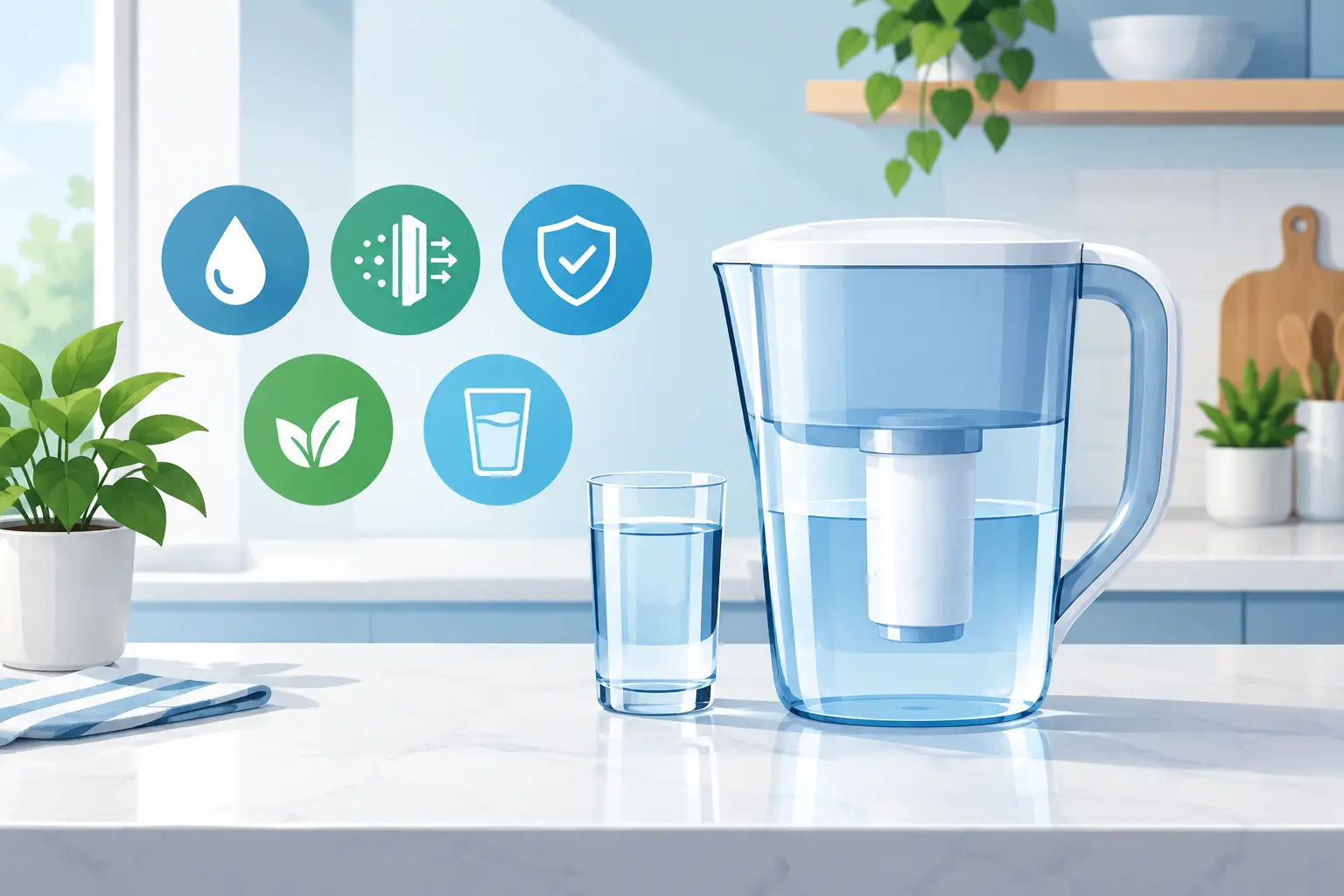
A jug filter or benchtop unit can improve the water in one glass. An undersink system can provide high-quality drinking and cooking water at one dedicated tap. Both have a place, especially where the immediate goal is better-tasting drinking water.
A whole-home, point-of-entry system works differently. It is installed where water enters the property, so treated water is supplied to the kitchen, bathrooms, laundry and outdoor taps. This means you are not only considering what you drink. You are also considering the water your family showers in, the water used to wash clothes and dishes, and the water moving through valuable appliances.
For homeowners investing in a long-term wellness upgrade, whole-home filtration is often the more complete solution. Chlorine odour in the shower, for example, will not be addressed by a filter beneath the kitchen sink. Nor will a drinking-water filter protect a hot-water system or washing machine from sediment entering elsewhere in the home.
That said, a whole-home system does not automatically replace every other treatment option. Some families pair it with an undersink reverse osmosis unit for drinking water where they want an additional level of purification at the kitchen. The best configuration is determined by the result you want, not by adding equipment for its own sake.
Match the filtration stages to the problem
Not all filters target the same contaminants, and no single media is ideal for every water condition. A well-designed household system usually uses more than one stage, with each component doing a clear job.
Sediment filtration captures physical particles such as sand, rust, dirt and fine debris. It is particularly useful for rainwater, older pipework or water supplies that can carry visible particulate matter. By removing sediment early, it can also help protect the filtration media that follows.
Activated carbon is widely used to improve taste and odour and reduce chlorine. Higher-performing carbon media may also be selected for a broader range of chemical contaminants, depending on the system design and the contact time between water and media. Chloramines require a more specialised approach than chlorine, so this should be discussed specifically if your local supply uses them.
Other filtration media can be included to target concerns such as heavy metals or scale-forming minerals. UV treatment is commonly used with rainwater systems to inactivate microorganisms, provided the water is sufficiently clear before it reaches the UV chamber. Reverse osmosis uses a fine membrane and is generally reserved for point-of-use drinking water because it produces water more slowly than a whole-home system needs to.
When comparing options, ask what each stage is intended to reduce, what the tested performance claims mean, and how long the media is expected to last. Broad statements such as “removes everything” are not a substitute for a system specification matched to your water.
Do not overlook flow rate and household demand
A filter can perform exceptionally in a controlled setting yet feel frustrating in a busy family home if it restricts flow. This is one of the most overlooked parts of choosing household filter systems.
Consider how many bathrooms your home has, whether showers are used at the same time, and whether you have high-demand fixtures such as rain shower heads, a large bath or an irrigation connection. A small system may suit a one-bathroom unit, while a larger home needs properly sized vessels, valves and plumbing to maintain a comfortable flow rate.
System sizing also affects filter life. If a cartridge or media bed is undersized for your household's water use, it may become exhausted earlier than expected. Choosing the right capacity from the start helps maintain performance and avoids unnecessary service interruptions.
Think beyond the initial installation
Water filtration is a home service, not a set-and-forget purchase. Cartridges need replacement, carbon media reaches the end of its useful life, and UV lamps require scheduled changes. The timing varies according to water quality, usage and the type of system installed.
Before proceeding, make sure you understand the ongoing care requirements. Ask who will service the system, how replacement parts are supplied, whether the components are readily available, and what support is offered if water pressure changes or a leak is suspected. Professional installation matters here too. Correct placement, bypass valves, drainage where required and access for servicing make a meaningful difference over the life of the system.
A premium filtration solution should be easy to live with. That includes clear maintenance scheduling, quality fittings and support from people who understand residential water treatment, rather than leaving you to interpret replacement intervals alone.
Consider the full household benefit
The value of filtered water is often felt in small daily moments. Water can taste fresher. Showering may be more pleasant when chlorine odour is reduced. Glassware may need less re-washing where sediment is an issue, and appliances can benefit from cleaner incoming water.
Health-focused households may also value the reassurance of reducing exposure to selected contaminants throughout the home. It is sensible to keep expectations grounded: filtration performance depends on the system, the contaminant, water conditions, flow rate and maintenance. But choosing a system with a clear purpose and appropriately specified media gives you far more confidence than relying on an inexpensive, one-size-fits-all filter.
For properties in Wollongong, the Illawarra, Kiama, Shoalhaven or the Southern Highlands, a professional in-home consultation can clarify whether your supply calls for town-water filtration, rainwater treatment or a tailored combination. It also gives you the chance to assess installation location, flow requirements and servicing access before a system is selected.
Choose expertise, not just equipment
The strongest household filter systems combine quality components with thoughtful design and long-term support. The Water Alchemists approaches filtration as part of a healthier home environment: water treatment selected around the people, plumbing and water source it will serve.
Start with the water you have, be clear about the result you want, and choose a system that can deliver it at every tap that matters. Because every drop deserves to be pure, clean and healthy.


Comments