
PFAS Filters: What Protects Your Home Water?
A glass of water can look crystal clear, taste fine and still contain compounds you would rather not bring into your home. PFAS filters are designed to reduce a group of persistent chemicals that have raised understandable questions for Australian families who want greater confidence in their household water.
For homeowners, the question is rarely just whether a filter can reduce PFAS. It is whether the system is suited to their water supply, their household’s daily water use and the level of protection they expect at every tap. The answer depends on the filtration media, system design, flow rate and ongoing maintenance - not simply the wording on a product label.
What are PFAS and why are they a concern?
PFAS stands for per- and polyfluoroalkyl substances. This large family of manufactured chemicals has been used in products and processes that need resistance to heat, water, oil or stains. They are often called ‘forever chemicals’ because many do not break down easily in the environment.
PFAS can enter water supplies through a range of pathways, including industrial activity, fire-fighting foam, landfill runoff and wastewater. The presence and concentration of PFAS varies considerably by location and water source. A town water supply may be carefully managed and monitored, while individual homes can still have different concerns depending on local history, plumbing, rainwater collection or private water sources.
The concern is long-term exposure. Some PFAS compounds can remain in the body over time, which is why many health-conscious households choose to take a precautionary approach to their drinking and household water. Filtration is not about fear. It is about making an informed choice for cleaner, healthier water in the place where your family drinks, cooks, bathes and lives.
How PFAS filters reduce contaminants
Not every water filter is a PFAS filter. Standard sediment cartridges capture physical particles such as sand, rust and silt, but they are not designed to remove dissolved PFAS. Effective reduction requires the right media and enough contact time between the water and that media.
Activated carbon
High-quality activated carbon, particularly granular activated carbon, is one of the most widely used filtration media for reducing many PFAS compounds. Its highly porous surface attracts and holds contaminants as water passes through. Carbon can also improve the taste and smell of water by reducing chlorine and certain organic compounds, making it a valuable part of a premium multi-stage system.
Performance is not the same across every carbon filter. The type and amount of carbon, water flow rate, chemical characteristics and cartridge replacement schedule all affect results. A small tap-mounted filter may offer limited media and brief contact time compared with a professionally specified system.
Ion exchange media
Ion exchange resins can be highly effective for selected PFAS compounds. These media work by attracting charged contaminants and exchanging them with other ions. They are often used alongside carbon, rather than as a complete solution on their own.
The trade-off is that resin selection and system sizing matter greatly. Once the media reaches capacity, its performance drops. It must be replaced or regenerated according to the system design, which makes professional advice and scheduled servicing especially valuable.
Reverse osmosis
Reverse osmosis uses a fine membrane to reduce a broad range of dissolved contaminants, including many PFAS compounds. It is typically installed at a single location, such as beneath the kitchen sink, and is an excellent option for households wanting highly treated water for drinking and cooking.
Reverse osmosis has practical considerations. It produces water more slowly than a whole-home system, needs regular filter and membrane maintenance, and creates a wastewater stream during treatment. For many homes, it works beautifully as part of a layered approach: whole-home filtration for water throughout the property, with reverse osmosis at the kitchen sink for drinking water.
Whole-home PFAS filtration versus a kitchen filter
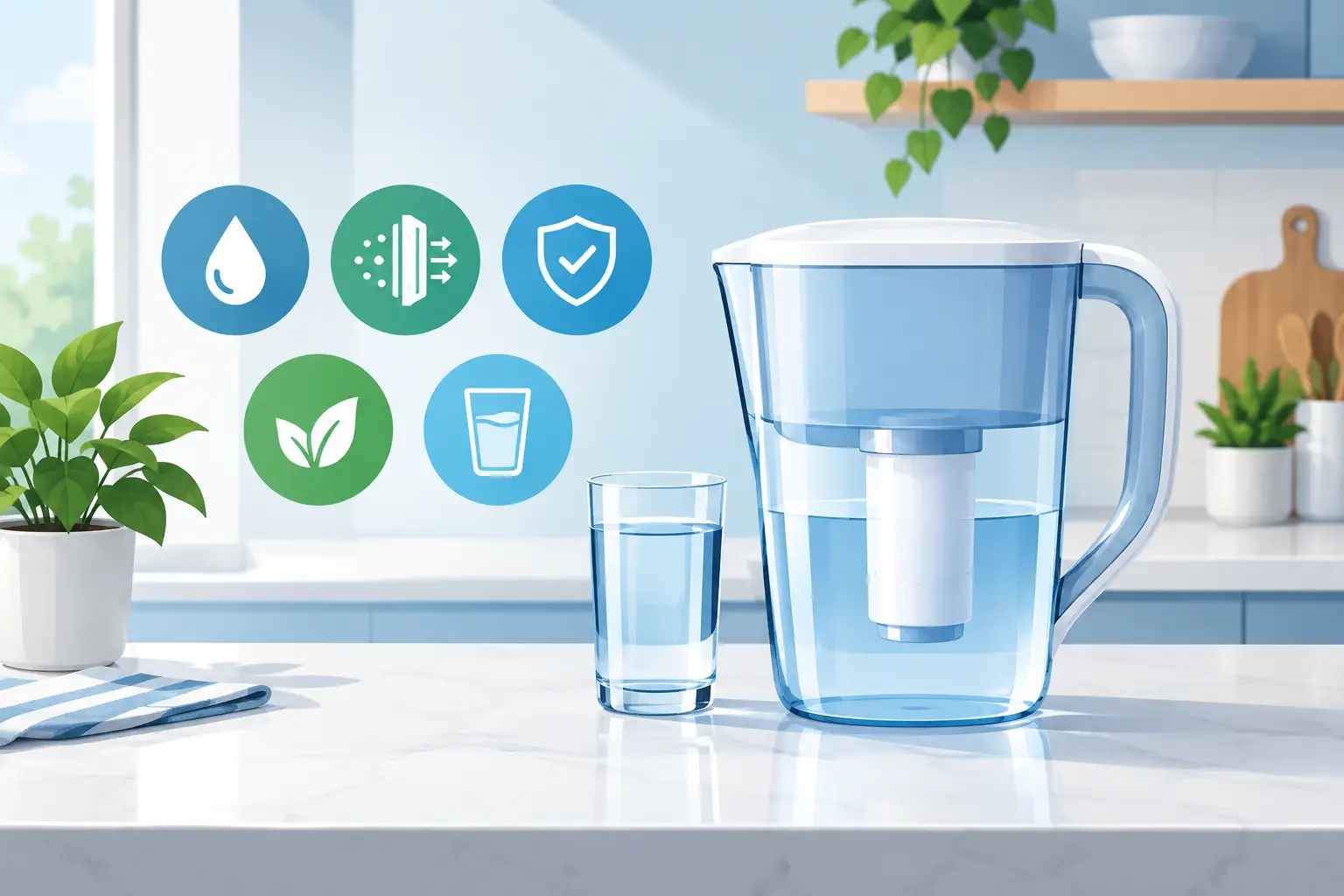
A jug filter or under-sink unit may be enough for someone focused only on drinking water. But water is used far beyond the kitchen. It fills the kettle, washes fruit and vegetables, runs through coffee machines, feeds ice makers and reaches every shower, bath and laundry tap.
A whole-home filtration system treats water at the point where it enters the property. This provides a consistent standard of water for the entire household and can reduce chlorine, sediment and selected chemical contaminants before they reach your taps, appliances and fixtures. It is particularly appealing for families who want the comfort of filtered water throughout the home, rather than managing several small filters in different rooms.
There is an important distinction, however. Whole-home systems must be correctly designed for household flow. A system that performs well at the low flow of a drinking-water tap may not deliver the same contaminant reduction when two showers, a washing machine and a dishwasher are operating at once. The vessel size, media volume, plumbing configuration and expected peak demand all need consideration.
For this reason, the strongest approach is often tailored rather than off-the-shelf. A professional water consultation can assess your source water, household size, plumbing and priorities before recommending a system with the capacity to perform as intended.
What to look for when comparing PFAS filters
Marketing claims can make every filter sound equally capable. Look beyond phrases such as ‘advanced filtration’ or ‘PFAS ready’ and ask how the system has been tested. Reputable suppliers should be able to explain the filtration media, expected service life and the contaminants the system is designed to reduce.
Ask whether performance data is based on independent testing and under what conditions it was achieved. Test results should identify the specific PFAS compounds assessed, influent and effluent concentrations, water flow rate and the point in the filter’s lifespan when testing occurred. A result from a new cartridge under slow-flow laboratory conditions may not reflect real household use over many months.
It is also worth considering these practical factors:
the water source, including town water, rainwater or bore water
household occupancy and peak water demand
pre-filtration needs for sediment, iron or other water-quality issues
available installation space and plumbing access
cartridge replacement intervals and the cost of ongoing care
A premium filtration system should be clear about maintenance, not vague about it. Filters do their best work when their media is fresh, correctly fitted and replaced on schedule. Delaying cartridge changes can reduce performance and, in some circumstances, affect water flow.
Why maintenance is part of protection
No filter is a fit-and-forget appliance. Carbon and ion exchange media have a finite capacity. Reverse osmosis membranes and pre-filters also need periodic attention. The correct schedule depends on the system, your water quality and how much water your household uses.
This is where an end-to-end service model offers real value. Rather than relying on a calendar reminder and hoping you have ordered the right cartridge, homeowners can have their system serviced, inspected and maintained by people who understand its design. It protects the investment in your home and helps ensure your water treatment continues to deliver the standard you selected it for.
For homes on rainwater, maintenance may include additional considerations such as tank hygiene, sediment management and UV sterilisation where microbial protection is required. PFAS reduction and biological safety are separate treatment goals, so the right solution may involve several stages working together.
A considered approach to cleaner household water
PFAS filtration is most effective when it is treated as part of a complete water-quality plan, not a single feature on a box. Start with the water entering your home, understand the concerns that are relevant to your supply, then choose filtration that has the capacity and service support to match your lifestyle.
For homeowners across the Illawarra, Southern Highlands and South Coast, The Water Alchemists can help make that decision straightforward with a considered in-home consultation and a professionally installed solution. Because every drop deserves to be pure, clean and healthy.


Comments