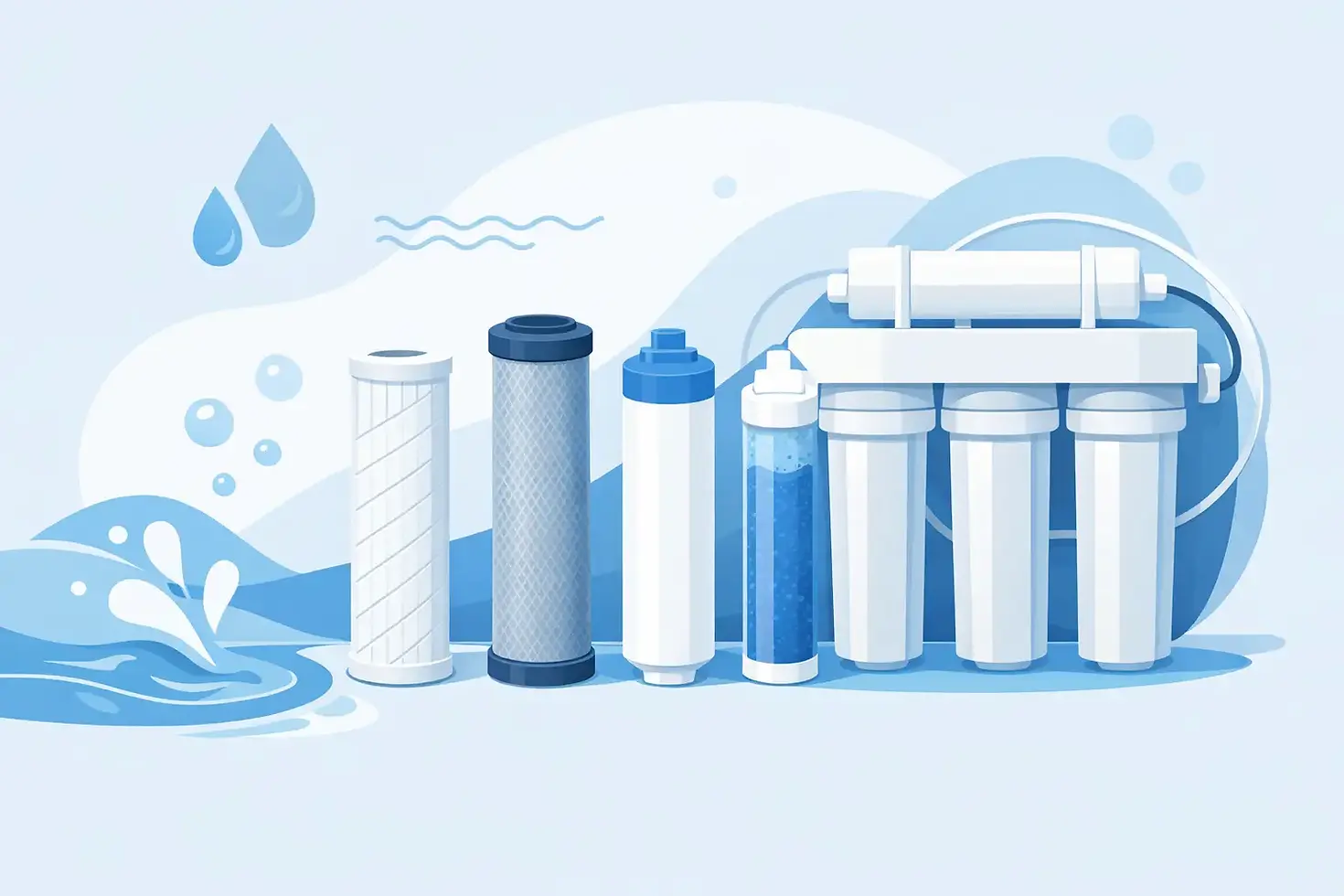
Replacement Cartridges for Water Filters Explained
A filter system can only perform as well as the cartridge inside it. Replacement cartridges for water filters are not a minor maintenance detail - they are the working core of your system, capturing or reducing the contaminants it was designed to address while supporting cleaner, healthier water at every use point.
For homeowners who have invested in whole-home filtration, timely cartridge changes protect more than the taste of drinking water. They help maintain the quality of water used for showers, cooking, laundry and appliances. The right replacement also helps preserve flow rate, protect your investment and keep your household water treatment performing as intended.
Why filter cartridges need regular replacement
Every cartridge has a finite capacity. As water passes through the filter media, sediment is trapped, activated carbon adsorption sites become occupied, and specialised media gradually reaches the limit of what it can effectively treat. A cartridge may still allow water to flow after this point, but that does not mean it is delivering the same level of filtration.
In town water, this often shows up first as a return of chlorine taste or smell. In other homes, reduced water pressure, cloudy water after periods of heavy rainfall, or a noticeable change in shower comfort can signal that maintenance is due. A cartridge that is overdue may also place unnecessary pressure on other stages in a multi-stage system.
The replacement interval depends on the cartridge type, water use, incoming water quality and the size of the system. A busy family home with high daily water use will generally consume cartridge capacity sooner than a smaller household. Homes using rainwater can have very different requirements, particularly where sediment loads change after weather events.
Which replacement cartridge does your system need?
Choosing by size alone is risky. Two cartridges can look nearly identical yet contain different filtration media, have different micron ratings or be designed for entirely different water conditions. The cartridge needs to match the housing, the filtration stage and the job it performs within the system.
Sediment cartridges
Sediment cartridges capture physical particles such as rust, sand, silt and pipe scale. They are commonly the first stage in a whole-home system because they protect the more specialised media that follows. Their micron rating matters: a lower number captures finer particles, but it may also restrict flow sooner if your water carries significant sediment.
A visibly discoloured sediment cartridge is useful evidence that it has been working, but appearance should not be the only guide. Fine particles can block filter media internally before a cartridge looks heavily soiled from the outside.
Carbon and catalytic carbon cartridges
Carbon media is widely used to improve taste and odour and reduce chlorine. Catalytic carbon is often selected where chloramines are present, as it is formulated to address these more persistent disinfectants. The precise choice should reflect your water source and the design of your system rather than a generic claim on a box.
For many NSW households connected to treated mains water, carbon-based filtration is central to reducing the chlorine smell that can affect drinking water and showers. When this stage is exhausted, the change is not always dramatic, which is why scheduled servicing is more reliable than waiting for a problem to become obvious.
Specialised contaminant-reduction media
Some systems use purpose-built media to target particular concerns, such as heavy metals, PFAS, pesticides, herbicides or scale. These cartridges are not interchangeable with standard carbon filters. Their performance depends on contact time, water chemistry and the manufacturer's rated capacity.
If your original system was specified after a water assessment, retain that treatment design unless a qualified adviser recommends a change. Replacing a specialised cartridge with a cheaper general-purpose alternative can alter the performance of the entire system.
Reverse osmosis and UV components
Undersink reverse osmosis systems have separate pre-filters, carbon filters and a membrane, each with its own maintenance schedule. The membrane usually lasts longer than the pre-filters, but it relies on those earlier stages for protection. Replacing only the membrane while leaving exhausted pre-filters in place is a false economy.
For rainwater systems with UV sterilisation, the UV lamp and quartz sleeve also need scheduled attention. UV treatment works only when water is sufficiently clear and the lamp is delivering the intended output. Cartridge replacement, sediment control and UV maintenance should be treated as one coordinated service plan.
When should you change water filter cartridges?
Your product specifications and service records should set the primary schedule. As a general principle, do not wait until water tastes unpleasant or pressure drops noticeably. Those are late indicators, and water quality changes can be less obvious than a clogged tap aerator.
Bring the service forward if you notice persistent chlorine odour, a sudden reduction in flow, increased sediment, unusual discolouration, changes in your water source, or a major increase in household usage. Renovations and local works can also disturb sediment in pipework, placing extra demand on pre-filters.
Conversely, a cartridge does not always need changing simply because it looks slightly coloured. Water quality, cartridge capacity and the manufacturer’s change interval matter more than guesswork. This is where a professional service approach is valuable: the system can be inspected as a whole, not just fitted with a new filter and forgotten.
Genuine, compatible and incorrect cartridges
There is a sensible distinction between a genuine replacement and a compatible cartridge. A quality compatible cartridge can be appropriate when it has the correct dimensions, seals, media specification, micron rating and independently supported performance claims for your housing and application. It should never be chosen solely because it is the least expensive option.
An incorrect cartridge may fit the housing yet still compromise water flow or filtration results. It may use less media, different carbon grades or a design that does not provide adequate contact time. Poor seals can also allow water to bypass the filter media altogether.
For premium whole-home filtration, consistency matters. Using the specified cartridge maintains the treatment sequence your system was designed around. It also makes it easier to keep accurate service records and identify whether a change in water quality is due to the source water, usage or a component that requires attention.
Make cartridge maintenance easier on your household
The simplest approach is to keep a written or digital service date near the system and arrange replacements before the expected change interval. If your system has multiple stages, label each housing with the cartridge type and installation date. This prevents the common mistake of replacing the easy-to-reach stage while overlooking the cartridge that does the more specialised work.
Store spare cartridges somewhere clean, dry and out of direct sunlight. Do not keep them indefinitely, and leave sealed packaging intact until installation. When a cartridge is changed, housings, O-rings and connections should also be inspected. An O-ring that is dry, damaged or incorrectly seated can lead to a slow leak that goes unnoticed in a garage, cupboard or under a sink.
Whole-home systems deserve particular care because they serve every tap in the house. If you are not confident isolating the supply, relieving pressure, checking seals and flushing the new media correctly, professional maintenance offers worthwhile reassurance. The Water Alchemists can help homeowners maintain the filtration design selected for their home, with the right consumables and practical support over the life of the system.
The value of replacing cartridges on time
A fresh cartridge does more than improve a glass of water. It supports the experience of bathing without the same chlorine odour, cooking with better-tasting water and protecting appliances from sediment where that is part of your treatment design. It also gives you confidence that the filtration system you chose is still doing its job.
The best replacement cartridge is not simply the one that fits. It is the one matched to your system, your water source and your household’s needs, changed before performance is allowed to drift. Because every drop deserves to be pure, clean and healthy.


Comments