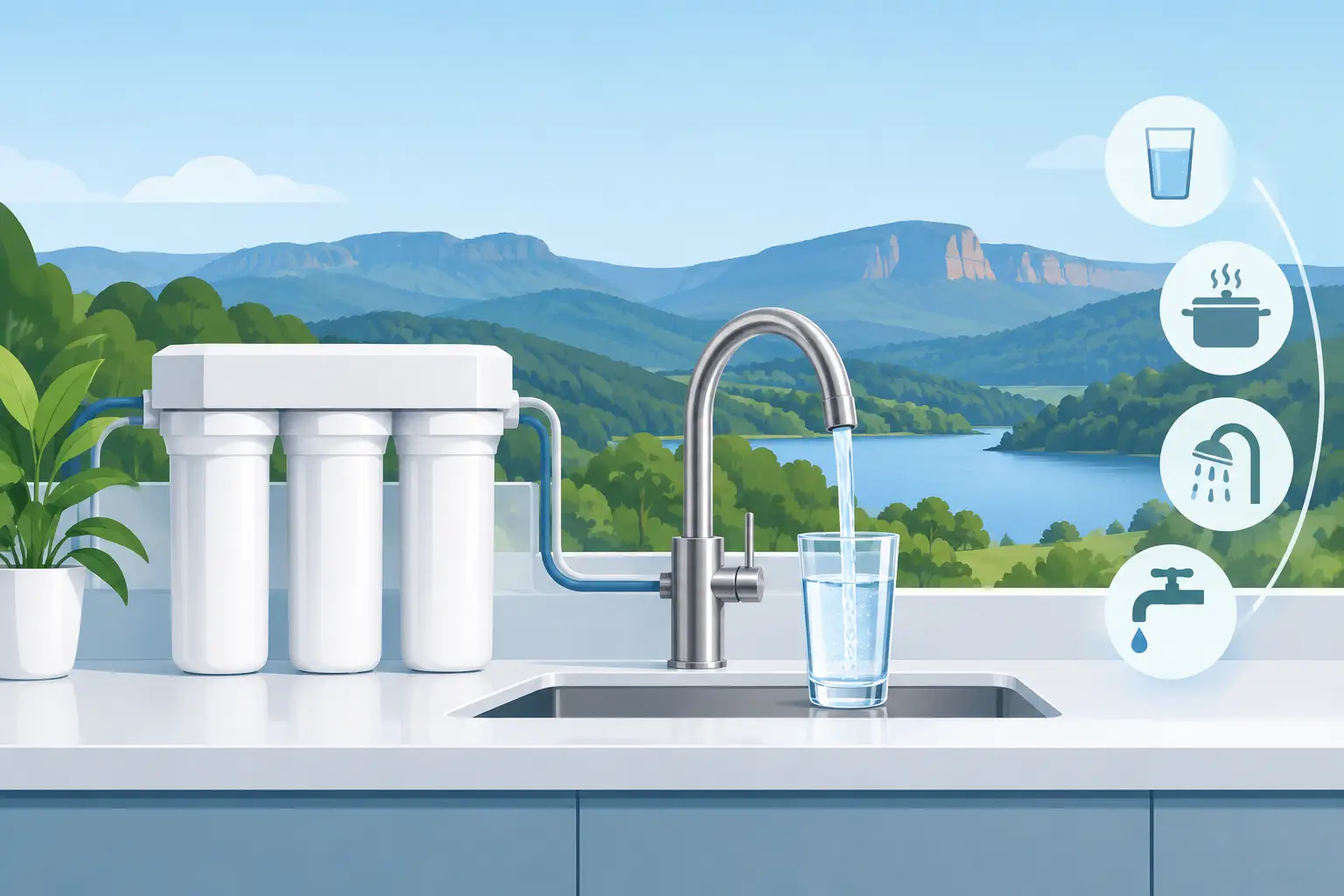
Southern Highlands Water Filtration for Every Tap
A glass of town water may look clear, yet still carry a noticeable chlorine smell. A rainwater tank can feel like the healthier choice, while introducing its own concerns around sediment, bacteria and organic matter. For homeowners, Southern Highlands water filtration is about looking beyond what water looks like and choosing cleaner, healthier water for the way your household actually lives.
From the first glass of water in the morning to children’s bath time, laundry, cooking and a long shower at the end of the day, water touches almost every part of life at home. A quality filtration system treats that experience as a whole, rather than asking one small tap filter to do all the work.
Why water quality deserves a closer look
The Southern Highlands has a mix of town-water homes and properties that rely on rainwater tanks, bores or a combination of sources. Water quality can vary between suburbs, seasons and individual properties. Even where mains water meets Australian drinking water standards, many homeowners would prefer to reduce the chlorine taste and odour that can affect drinking water, tea, coffee and cooking.
For families using tank water, the priorities can be different. Rainwater can collect fine sediment, leaf matter, bird and animal contamination, and microorganisms as it moves from the roof to the tank and then into the home. A properly designed system may need sediment filtration, carbon filtration and UV sterilisation, depending on the water source and condition.
Then there are the wider questions homeowners are increasingly asking about. These include PFAS, microplastics, heavy metals, pesticides, herbicides, chloramines and other contaminants that may be present in water supplies or household plumbing. The right response is not a generic promise that one filter removes everything. It is to understand the water source, identify the household’s concerns and specify treatment technology that is suited to the job.
Southern Highlands water filtration should treat the whole home
A jug filter or basic tap attachment may improve the taste of drinking water at one outlet. That can be useful, but it leaves every other tap, shower and appliance untouched. If chlorine odour is noticeable in the kitchen, it is also likely present when you shower, fill the bath, wash clothes or run the dishwasher.
A whole-home, point-of-entry filtration system is installed where water enters the property. Every tap then benefits from treated water, creating a consistent standard throughout the house. This approach is particularly valuable for homeowners who want filtered water for bathing as well as drinking, or who want to support the condition and longevity of appliances that use water every day.
The difference is practical. Washing fruit and vegetables feels more considered. Tea and coffee can taste cleaner. Showers no longer fill the bathroom with a chemical smell. For people with dry or sensitive skin, reducing chlorine exposure in bathing water may be an appealing part of a broader wellness-focused home.
What a multi-stage system can do
Premium filtration is rarely a single cartridge and a sales claim. Effective whole-home systems often use several stages, each with a defined purpose. A sediment stage captures rust, dirt and other particles. High-quality carbon media can reduce chlorine, chloramines, unpleasant taste and odour, along with a range of chemical contaminants. Depending on the system and water assessment, additional media may target specific contaminants or address scale and water hardness concerns.
For rainwater, UV sterilisation can provide an important final barrier against microorganisms. UV does not replace good tank hygiene or pre-filtration, however. Water needs to be clear enough for UV light to work effectively, which is why the order and design of each stage matters.
No filter should be selected simply because it has the longest list of claims. Filtration performance depends on factors such as flow rate, cartridge size, contact time, water pressure, maintenance and the contaminants being targeted. A system that is well matched to a household is more valuable than an oversized promise in a shiny housing.
Start with your water source and household priorities
The best filtration solution depends on where your water comes from and how your household uses it. Mains water homes may focus on chlorine and chloramine reduction, drinking water taste and a whole-house wellness upgrade. Tank-water properties may need a more protective treatment train, with particular attention to sediment and microbial safety.
Your property also matters. A large family home with several bathrooms has different flow requirements to a cottage occupied by two people. If a filtration system is too small, it can restrict water pressure when multiple taps are running. If it is unnecessarily complex, the ongoing cost and maintenance may not reflect the benefit.
A professional in-home consultation takes these details into account. It can assess the incoming supply, available installation space, plumbing configuration, water usage and your specific concerns. This is the sensible point to discuss whether you would also benefit from an undersink reverse osmosis system for exceptionally refined drinking water, separate from whole-home treatment.
Questions worth asking before you choose
Before investing, ask what the system is designed to reduce, how it performs at your expected household flow rate and what maintenance is required. Ask where it will be installed, whether replacement cartridges are readily available and whether professional support is included after installation.
It is also reasonable to ask for clear advice about limitations. Carbon filtration, for example, is highly effective for many taste, odour and chemical-reduction applications, but it is not automatically the answer for every dissolved contaminant or every rainwater issue. A trustworthy recommendation explains both the benefits and the boundaries of the proposed system.
Installation and maintenance protect your investment
A premium filtration system is home infrastructure. Like hot water, solar or heating, its performance depends on professional installation and sensible ongoing care. The system needs to be correctly positioned, securely plumbed, protected from avoidable weather exposure and accessible for servicing.
Cartridges and filtration media do not last forever. As they capture contaminants, their capacity is gradually used. Leaving them in place beyond their recommended service interval can reduce performance and may affect water flow. The right replacement schedule depends on the filter type, water quality and volume of water used, not simply the date on a calendar.
For tank-water systems, maintenance may also include checking pre-filters, cleaning UV components and keeping the tank, gutters and roof catchment in good condition. Filtration works best as part of a considered water-management plan, not as a substitute for basic property care.
This is where an end-to-end service makes a real difference. Rather than purchasing a system online and hoping it suits your plumbing, homeowners can have the system assessed, supplied, installed and maintained by specialists who understand the local area and the equipment they fit.
A better standard for everyday water
Water filtration is often framed as a kitchen upgrade. For a family that values health, comfort and the quality of their home, it is much more than that. It is about improving the water used in every shower, every meal, every load of washing and every glass poured from the tap.
The Water Alchemists can help Southern Highlands homeowners assess the right whole-home approach for town water or rainwater, without forcing every property into the same solution. Because every drop deserves to be pure, clean and healthy, the best next step is a tailored assessment of the water already coming into your home.


Comments